
中國國民黨數位黨部
社團法人中國國民黨Events
3.430.00 Reviews
- Version
- 1.0.46
- Installs
- 10.00K
- Age Rating
- Teen
Screenshots
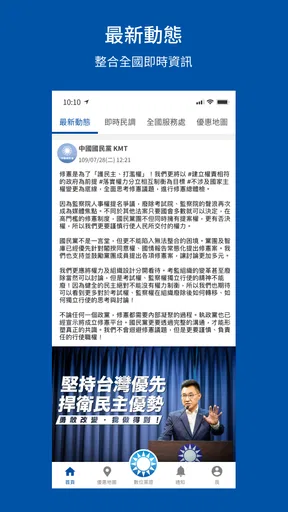
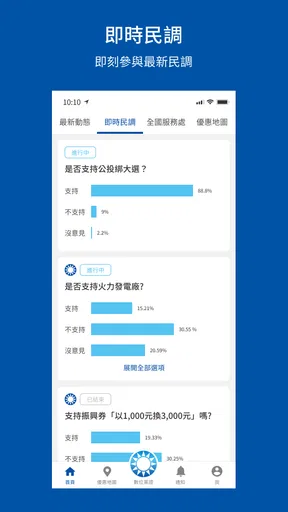
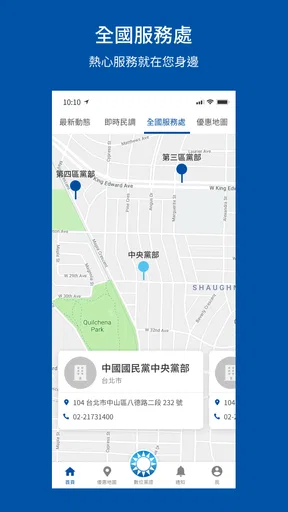
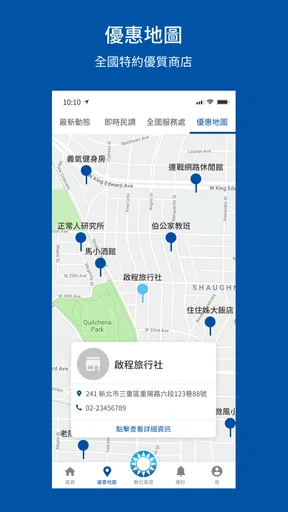

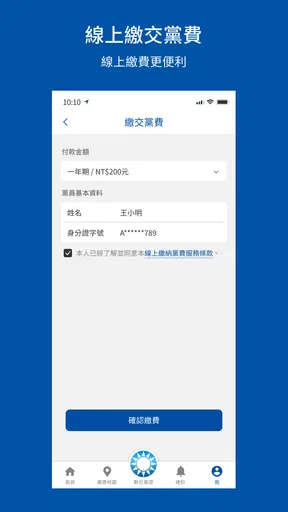
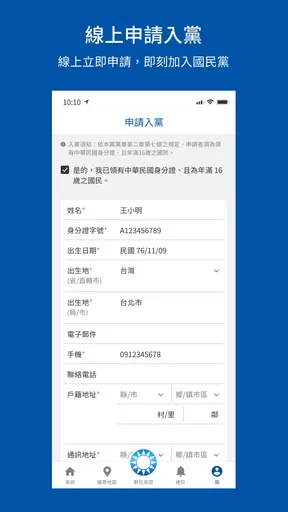
Our Review of 中國國民黨數位黨部
 Analysis by Appyee
I approached 中國國民黨數位黨部 as an events-focused mobile app rather than as a general social network or a replacement for every party communication channel. Its purpose is practical: it gives members a digital point of contact with the Chinese Kuomintang and gathers party-related services into a phone-based experience. That narrow focus is important. If you already need information connected with party activities, a dedicated app can be more convenient than searching through unrelated websites, social platforms, or scattered messages.
The app is free to use, is intended for teenagers and older users, and comes from 社團法人中國國民黨. It is available for Android devices running version 8.1 or later, and the current release is 1.0.46. In everyday use, I would treat it as a companion for staying connected with party information and digital services, not as an independent source of broad news or a universal event planner.
How I would build a reliable everyday routine around it
The most useful starting point is to decide what you want from the app before opening it repeatedly. For a party member, that might mean checking upcoming activities, looking for relevant notices, or using a digital service instead of relying on a paper-based or in-person process. For someone who only wants general political news, the fit is less obvious because the app’s identity is tied specifically to the Chinese Kuomintang and its member-facing digital services.
My baseline workflow would be simple. I would open the app when I need party-related information, review the most relevant event or service area, complete the action I came for, and then leave rather than treating it like an endless feed. That habit keeps the app useful and reduces the temptation to compare it with large social platforms that are designed around constant scrolling.
There is a practical advantage to this focused approach. When an app is connected to a particular organization, the information architecture can be more meaningful for its intended audience than a general search engine result. Instead of remembering which account, website, or message thread contains a detail, I can begin with one dedicated channel. The trade-off is that the app’s value depends heavily on whether I am actually involved with the organization or interested in its activities.
A realistic scenario would be a member preparing for a busy week. Rather than checking several unrelated sources during a commute, I would use the app as a first stop for party events and digital services, note anything that requires follow-up, and then return only when I am ready to act. This is a better use pattern than opening it casually throughout the day without a specific purpose.
I also recommend separating discovery from confirmation. The app may help me find a relevant event or notice, but before making travel plans or promising to attend, I would read the available details carefully and check whether any action is required. That small pause matters with event apps: finding something is not the same as completing registration, understanding the schedule, or knowing what to bring.
The store rating sits at a 3.4 average from around 800 ratings, which suggests a mixed experience rather than universal satisfaction. I would read that as a reason to keep expectations realistic. The app may be valuable because of its direct connection to the organization, even if its interface or workflow does not feel as polished as a major commercial platform.
What I would check before relying on it
Before making it part of my routine, I would confirm that my phone meets the minimum Android requirement and that the app opens comfortably on my device. Older operating systems can create friction even when an application technically installs, so compatibility is worth checking before an important event or deadline.
I would also spend a few minutes learning where the main event and service areas are located. The goal is not to memorize every screen. It is to identify the path from opening the app to the information I use most. Once that route is familiar, the app becomes less of a browsing task and more of a repeatable tool.
One useful habit is to note the exact wording of the service or event you need. Organization-specific apps can use formal labels that differ from the words people use in conversation. Searching or scanning with the official term may be faster than guessing based on casual language. If I find a useful section, I would remember its location and return there directly the next time.
Another sensible check is whether the information is current when I need it. I would not assume that opening the same screen guarantees that nothing has changed. For time-sensitive activities, I would refresh the relevant area and reread the details instead of relying on memory from an earlier visit.
Because this is an events app, timing changes the value of the experience. A person who checks only after an activity has passed will naturally find it disappointing, while someone who builds a regular check into their week is more likely to benefit. I would choose a consistent moment, such as the start of the week or before planning weekend activities, and use that as my main review point.
Settings and phone habits that make the experience smoother
I would begin with the app’s available settings and the phone’s own notification controls. The right balance depends on how closely I follow party activities. Someone who needs timely notices may prefer to keep relevant alerts available, while a casual user may want fewer interruptions and choose to check manually. The important point is to make that choice deliberately rather than allowing notifications to shape the entire routine.
On a shared or frequently borrowed phone, I would be especially careful about how I leave the app after using it. I would avoid leaving a personal service screen open and would lock the device when finished. That is not a criticism unique to this application; it is simply a sensible habit whenever a phone is used for member-facing services.
I would also keep the app updated through the normal store process. The current version is 1.0.46, and staying current is a straightforward way to receive the developer’s latest maintenance work. I would not update immediately before an important appointment if I could avoid it, though. My preference is to update during a calm moment, open the app once afterward, and make sure the screens I use most still behave as expected.
Storage and battery are usually less important than clarity here, but I would still avoid treating the app as a permanent background activity. If I only need it occasionally, opening it when necessary is a cleaner routine than constantly switching back to it. This also helps me notice whether the information I need is available without turning the app into another source of digital noise.
A small but valuable setting-related habit is to keep the phone’s language and text display comfortable for reading. Party notices and event information can become difficult to scan when text is too small or when I am rushing. I would adjust the device display rather than trying to read important details while distracted, especially before an event with a fixed start time.
Faster patterns for members who use it often
Experienced use is less about discovering secret functions and more about removing repeated decisions. I would create a short personal checklist: open the app, check the event area, review new notices, complete any relevant service action, and record anything that needs a later response. Using the same order each time makes it easier to notice what has changed.
If one section matters far more than the others, I would make it my starting point through a repeatable phone habit. That could mean placing the app somewhere easy to reach, using the operating system’s normal app search, or opening it at the same point in my weekly schedule. I would not assume that an in-app shortcut exists; the reliable shortcut is the routine I control.
For event planning, I would capture the practical details immediately after reading them. I might add the date and location to my personal calendar, write down a contact or follow-up task, and note whether I still need to complete an action inside the app. This prevents a common mistake: seeing an event announcement and assuming that remembering it is enough.
Another efficient pattern is to handle digital services in batches. If I have several member-related tasks, I would gather them and complete them in one focused session rather than opening the app for every small question. This is particularly useful for people who do not need daily updates but still want to keep their information organized.
I would also distinguish between information that needs immediate attention and information that is merely interesting. A new event requiring preparation belongs on my action list. A general notice may only need a quick read. That distinction keeps the app from becoming a source of unfinished intentions, which is one of the main problems with any service that combines updates and actions.
The app has more than 10,000 installs, so it is not an entirely isolated experiment, but it remains a specialized tool rather than a mass-market social destination. That scale reinforces my recommendation to use it with a clear purpose. Its strongest advantage is relevance to the organization it represents, not the breadth of a huge public platform.
Where the app’s focused design becomes a limitation
The same specialization that makes the app useful for party members can make it unsuitable for everyone else. If I want neutral event discovery, broad civic information, or a single calendar covering many organizations, I would choose a general events service or a news source instead. Those alternatives are better when comparison and breadth matter more than direct organizational connection.
I would also avoid depending on this app alone for urgent coordination unless I had already confirmed that the relevant information is available there and that I understand the required workflow. A dedicated digital channel can simplify access, but it does not automatically replace personal confirmation, direct contact, or other official communication methods when plans change quickly.
The mixed rating is another reason I would test the app before an important occasion. I would open the areas I expect to use, read an ordinary notice, and try the member service that matters to me. If that basic path feels clear, the app may be perfectly adequate. If I find myself repeatedly unsure where to go, I would keep another communication route available rather than waiting until an event day.
There is also a difference between a useful digital service and a polished consumer app. I can forgive a less fashionable interface if it takes me directly to relevant party information. I would be less forgiving of unnecessary steps, unclear labels, or a workflow that makes me repeat the same information. In that situation, the app’s institutional purpose would not remove the need for a more convenient alternative.
Privacy and account decisions deserve ordinary care as well. I would read each screen before submitting personal information, use only the services I actually need, and avoid entering details hastily on public networks. These are not reasons to reject the app, but they are good boundaries for any member-facing application connected with an organization.
Who will benefit most from this app?
I think the best audience is an active or interested Chinese Kuomintang member who wants a direct mobile route to party events and digital services. For that person, the app’s narrow purpose is a strength. It can reduce the need to search across unrelated channels and provide a familiar place to begin when looking for organization-specific information.
It may also suit users who prefer a dedicated app to social media. Social platforms can mix official notices with commentary, reposts, and unrelated content. A focused organizational app offers a different kind of experience: less broad, but potentially easier to approach when the question is specifically about party activity or member service.
I would recommend skipping it if I have no connection with the organization and only want general event recommendations. I would also look elsewhere if I need sophisticated ticketing, cross-platform calendars, community discussion, or broad local discovery. Those needs belong more naturally to established event platforms, calendar tools, or general news applications.
For older Android users, the minimum operating system requirement of 8.1 is worth checking before installation. The app is free, which removes a financial barrier, but free access does not mean it will be useful to every person. The real question is whether its organization-specific information matches my reason for installing it.
My verdict after using it as a focused member tool
中國國民黨數位黨部 makes the most sense when I treat it as a practical bridge between party members and the organization’s digital services. I would not install it expecting a broad social network, a universal event calendar, or a replacement for every official contact method. I would install it because I want party-related information and services gathered in one dedicated place.
My preferred approach is disciplined: check the relevant area on a regular schedule, adjust notifications to match my involvement, copy important event details into my own planning system, and keep a second confirmation route for anything time-sensitive. Those habits do more for the experience than searching for advanced features that may not be part of the app.
The result is useful but specialized. The developer, 社團法人中國國民黨, has positioned the app around digital access for party members, and that purpose comes through clearly. Its free availability and modest Android requirement make it approachable, while the middling user rating reminds me to test the workflows that matter before relying on them.
My recommendation is straightforward: if you are connected to the Chinese Kuomintang and want a dedicated channel for events and member services, it is worth trying. Use it with a repeatable routine and realistic expectations. If your needs are broader, more neutral, or more event-management oriented, a general-purpose alternative will probably serve you better.
Privacy and Permissions
See what permissions an app requests and how it handles your data.
- Location
- approximate location (network-based), precise location (GPS and network-based)
- Phone
- read phone status and identity
- Photos/Media/Files
- read the contents of your USB storage, modify or delete the contents of your USB storage
- Storage
- read the contents of your USB storage, modify or delete the contents of your USB storage
- Camera
- take pictures and videos
- Device ID & call information
- read phone status and identity
- Other
- view network connections, full network access, prevent device from sleeping
Verdict
Strengths of 中國國民黨數位黨部
- Provides official KMT news, statements, and policy updates in one place.
- Offers a direct channel for members and supporters to follow party activities.
- Digital access makes party information available without visiting a local office.
- May include event notices, campaign content, and organizational announcements.
- Useful for users who want updates from the party’s own official perspective.
Limitations of 中國國民黨數位黨部
- Content is politically partisan and may present limited opposing viewpoints.
- Some features may be mainly relevant to registered members or supporters.
- Update frequency can vary depending on current political events.
- Privacy details should be reviewed before submitting personal or membership information.
- Availability and functionality may differ between Android and iOS versions.
Similar Picks in This Category
View All
Easy Quran Mp3 Audio Offline
Muslim Worldapp4.7

Invitation Maker: Cards & RSVP
Greetings Island4.9

StubHub - Live Event Tickets
StubHub4.3

Fever: Events & Tickets
Fever Labs4.7

Epic Freebie Games Radar
Arioch Pds - Apps & Games4.4

Invitation card Maker, Design
Splendid App Maker4.9
Frequently Asked Questions
What is 中國國民黨數位黨部, and who is it designed for?
中國國民黨數位黨部 is a digital platform associated with Taiwan’s Kuomintang (KMT), created to provide party-related information and online services in one place. It is mainly intended for KMT members, supporters, volunteers, and people interested in the party’s activities, announcements, campaigns, and public positions. Before downloading, users should understand that the content is political in nature and may reflect the KMT’s official viewpoints.
What features can users expect from the 中國國民黨數位黨部 app?
The platform may provide access to party news, announcements, event information, campaign materials, membership-related services, and opportunities to participate in digital activities. Depending on the current version and the user’s account status, some functions may include profile management, notifications, registration forms, surveys, or volunteer interaction. Features can change over time, so users should check the official app listing and privacy information for the most accurate details.
Do I need to be a Kuomintang member to use 中國國民黨數位黨部?
Not necessarily. Some sections may be available to the general public, such as news, public statements, event details, and general party information. However, services involving membership records, internal notices, digital identification, voting, registration, or participation in party activities may require an account or verified KMT membership. If you only want to browse public content, downloading may still be useful, but access to certain features could be restricted.
What personal information and permissions might the app request?
A political organization’s app may request information needed for account creation, membership verification, event registration, communication, or personalized notifications. Depending on its design, it could ask for contact details, identification or membership information, notification access, camera permissions for scanning codes, or location access for event-related functions. Review the app’s privacy policy and permission prompts carefully, and avoid granting optional permissions that are not necessary for the features you plan to use.
Is 中國國民黨數位黨部 available for both Android and iPhone, and where should I download it?
Availability can depend on the current release, region, and operating-system version. Users should search for 中國國民黨數位黨部 through the official Google Play Store or Apple App Store and confirm that the developer information matches the Kuomintang or its authorized organization. Avoid downloading modified APK files or installation packages from unofficial websites, because political apps can involve sensitive personal information. Check recent reviews, update dates, and required permissions before installing.
